THE SKY
Where the stars went
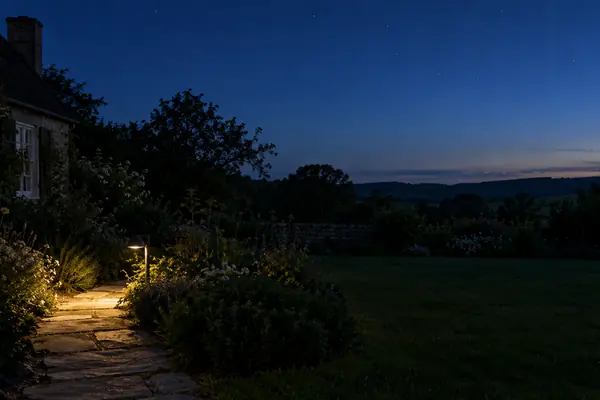
In CPRE's 2023 Star Count, nearly 4,000 people counted stars in Orion. Only about 5% saw a truly dark sky.
See the numbersWHAT THE GUIDANCE SAYS
Night is a habitat too.
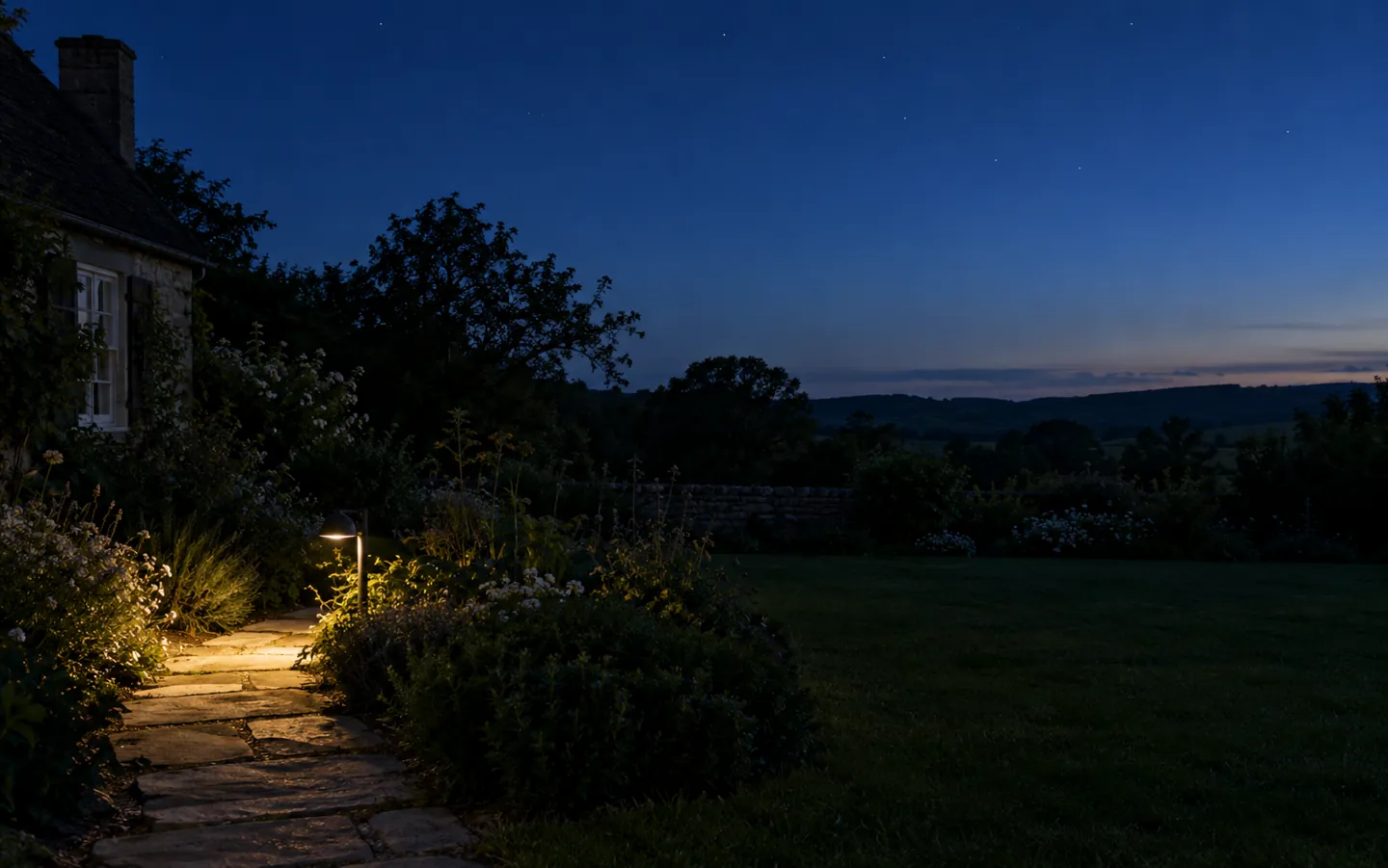
Security lamps, porch lights and garden strings all spill into the dark around a home. UK planning guidance and lighting experts agree on a simple rule: light only where you need it, when you need it, and no more.
AIM DOWN and switch off
THE SHORT ANSWER
Light pollution is light where it is not wanted or needed.
Most of it is fixable at the switch.
THE SKY
In CPRE's 2023 Star Count, nearly 4,000 people counted stars in Orion. Only about 5% saw a truly dark sky.
See the numbersWILDLIFE
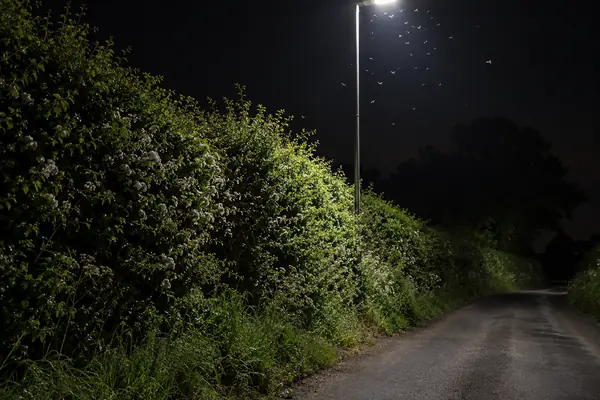
Hedgerows under white LED streetlights held 52% fewer moth caterpillars than nearby unlit hedgerows in a UK field study.
Why it mattersAT HOME
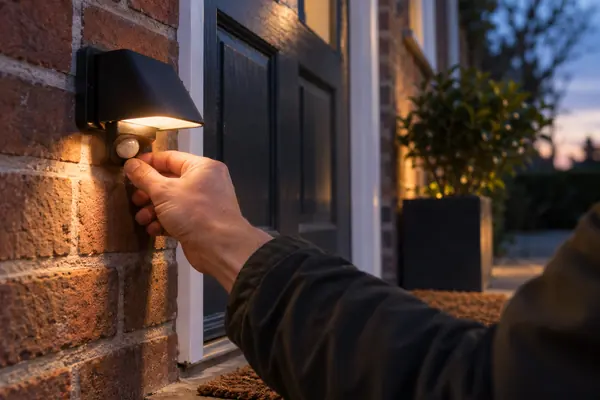
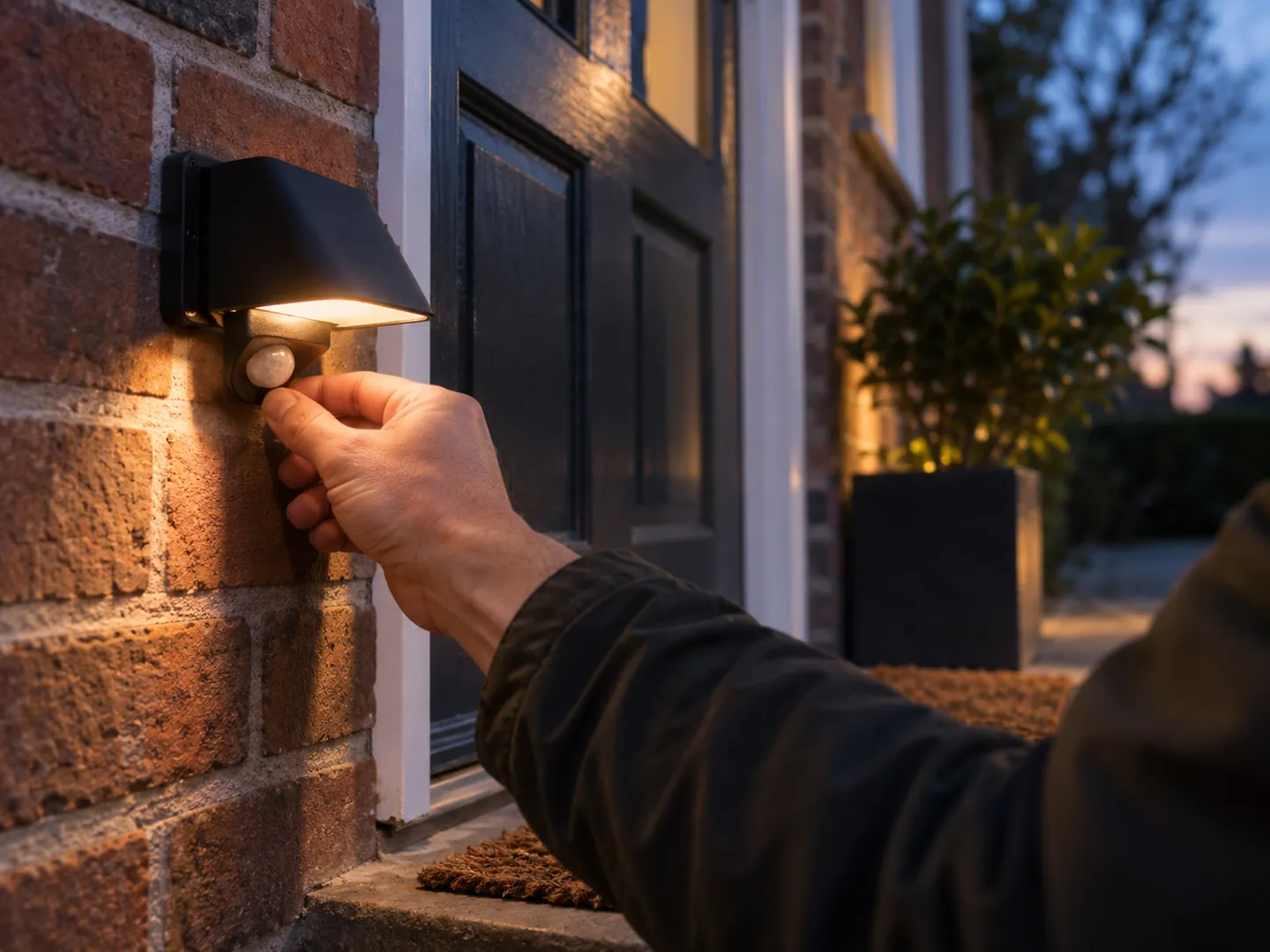
Lighting experts say outdoor light should be useful, targeted, low, controlled and warm. A shielded lamp on a sensor ticks most boxes.
Check your lightA QUICK LIGHT CHECK
Pick a common type of outdoor light to see how it measures up against the five principles of responsible lighting. The bar shows how much light it is likely to spill into the night.
Based on DarkSky and the Illuminating Engineering Society's Five Principles and GOV.UK planning guidance on light pollution. General information only.
TWO NUMBERS WORTH KNOWING
One figure on the sky above us,
one on the insects below the lamps.
≈ 5%
People who saw a truly dark sky
Almost 4,000 people counted the stars they could see in Orion in February 2023. For just over half of them, severe light pollution obscured the night sky.
STAR COUNT 2023 · CPRE
52% fewer
Moth caterpillars in hedgerows under LEDs
Hedgerows under white LED streetlamps held 52% fewer caterpillars than unlit ones, against 41% fewer under yellow sodium lamps. The study sampled 55 sites in the Thames Valley.
STREETLIGHTS · UKCEH
Butterfly Conservation notes that the total abundance of moths in Britain has fallen by a third over the past 50 years. The study's authors say LEDs can be dimmed and filtered far more easily than sodium lamps.
FOUR THINGS TO TRY
These are mostly about where your existing lights point and when they are on, not about buying new ones.
Look at each outdoor light from the garden and the street. Ask what it is for and whether it shines past your boundary.
Point lamps down at the ground or path. A hood or shield stops light reaching the sky, the hedge and the neighbour's window.
Planning guidance suggests switching lights off when not needed, for example between midnight and 5am or 6am.
Pick the lowest brightness that does the job and a warmer colour, with less of the blue-violet light that affects wildlife.
WHY DARKNESS MATTERS
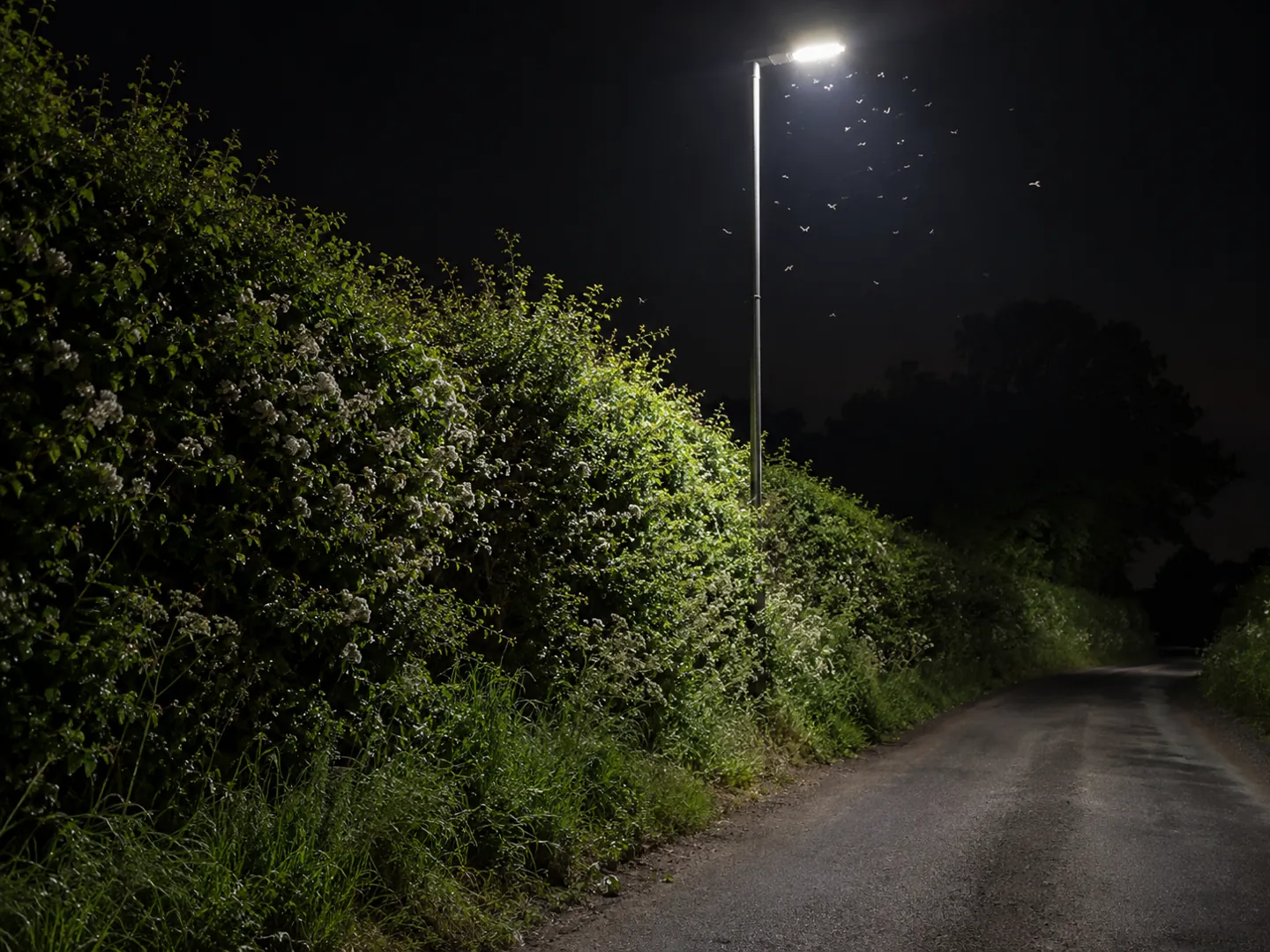
Moths, bats and migrating birds all rely on darkness. CPRE says artificial light confuses migrating birds, often fatally, and interrupts the feeding and breeding of pollinating insects and bats. The Bat Conservation Trust notes that the light-avoiding species include all of the UK's rarest bats.
People notice it too. In a CPRE survey, half of respondents said light through their bedroom window disrupted their sleep. In England, artificial light from premises can count as a statutory nuisance that councils must investigate.
Questions
CPRE describes it as artificial light shining where it is neither wanted nor needed. It names three types: skyglow over towns, glare from overly bright lamps, and light intrusion spilling over a property boundary.
In a UK field study, hedgerows under white LED streetlights had 52% fewer moth caterpillars than unlit hedgerows, compared with 41% fewer under sodium lamps. The authors add that LEDs are easier to dim and filter.
The guidance is not about removing light that has a purpose. It asks for light that is aimed where it is needed and controlled, for example with a motion sensor, rather than left on all night.
A friendly word is often the first step. In England, artificial light from premises can be a statutory nuisance, and councils must investigate complaints about it.
CPRE's annual citizen science survey asks people to count the stars they can see inside the constellation Orion. The 2023 count ran from 17 to 24 February and almost 4,000 people took part.
Sources
ABOUT THIS NAME
doodlenight.com is part of the DoodleSale portfolio. It isn't in an auction right now, but you can ask about leasing it.